
Last week when I was creating this plan, I was trying a lot of new recipes. And all of them turned out gross. I was feeling really bad about myself because nothing was turning out well. But when I really think about it, failing is part of learning how to cook.
Failing is teaching you what you don’t like, what might be a technique you need to work on, or which recipes might be too complex for your busy schedule.
We (I) still ate them, because I didn’t want to just throw away food. But they weren’t my best work. Sometimes there are weeks like that! If you are new to cooking at home, at first things might not taste perfect or be restaurant quality. The only way to get better at cooking is to cook more.
When I feel like I am only making gross things, no one likes them, and I don’t know what to make I know it is time to go back to some old favorites. Those recipes you continue to go back to over and over.
I like to print these good ones out and put them in a binder or folder in my cookbook cabinet, or save them to a note in my phone. Then when inspiration is low, I can easily look them up and figure out what I’m going to eat.
You don’t need a brand new recipe each week, or to have the most exciting meal of your life. Of course we want your food to be enjoyable, but it isn’t realistic to think every single meal is going to be the best meal of your life. Sometimes food is just food. And sometimes the best recipes are the ones you make over and over, where you don’t really even need to look at the recipe anymore because you know it by heart. These are the recipes that really carry you through because you can pickup the ingredients without a list, throw them together while having a conversation with your kids or on the phone, or watching your favorite TV show on your laptop. They are reliable.
So while I aim to give you variety (quite frankly a lot more variety than what I eat week to week) know that it isn’t necessary for a healthy diet. In fact, too much variety can make it challenging to stay consistent with your eating patterns. Swapping out seasonal vegetables, changing up the protein source, and adding extras is a great way to keep old favorites feeling fresh.
Feel free to go back and peruse the recipe index to find your favorites, print them off, bookmark them, and make them over and over.
This is a guide, not a rulebook. It’s here to help you build balanced meals, not lock you into anything rigid. Swap ingredients, make changes, take what you need, and leave the rest. ♥️
This plan follows my OKP Signature Method, designed to reduce decision fatigue and make the healthy choice the easy choice.
Here’s the structure:
• One breakfast you prep once and eat through the week
• One lunch you prep once and eat through the week
• One snack or dessert
• Two or Three balanced, satisfying dinners that actually taste good (make enough for leftovers if you can!)
You’ll see ingredients repeat, that’s intentional. These are foods that consistently deliver lean protein, fiber, whole grains, nutrients, and flavor.
These recipes are designed to be meal-prep friendly. No soggy lunches by Wednesday, and no four-serving recipes for a five-day workweek (unless we change to a 4-day workweek, which I fully support 😊).
The goal is simple: get you through the week well-fed and happy.
These are the kinds of meals I eat week to week as a dietitian who focuses on eating to feel good, support muscle growth, include lots of fiber and produce, and support overall balance. There’s enough variety to keep things interesting, but not so much that you need a brand-new grocery list every week. If you like something, bookmark it and make it again. Building a roster of go-to recipes is how you start cooking from memory, riff on your favorites, and make healthy eating sustainable long-term.
Eat well. Feel good. Repeat next week.
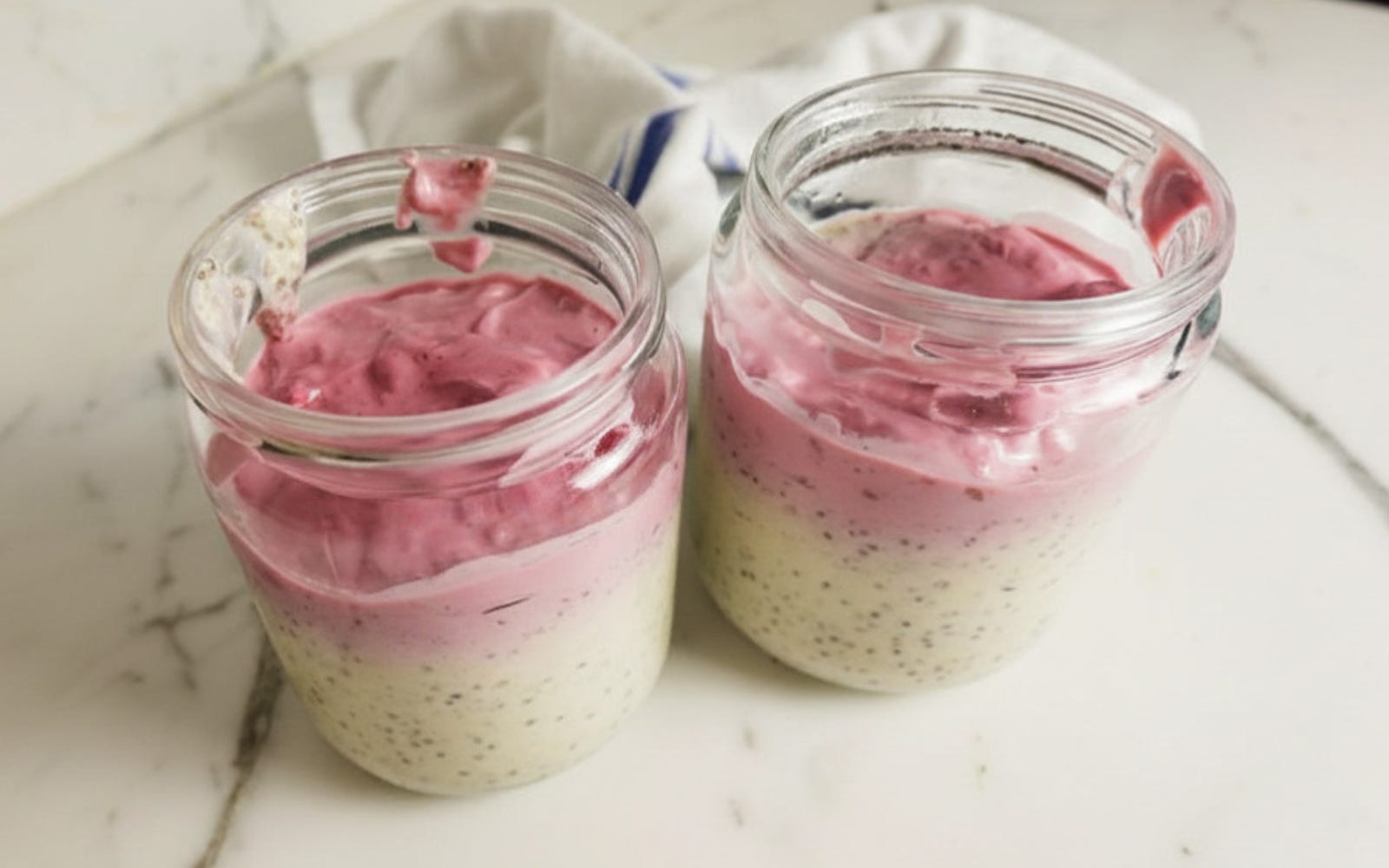
Breakfast: Key Lime Oat Bran Chia Pudding
Yes, another riff on the chia pudding. I love a breakfast like this because it really sets you up for a wonderful day. I make sure you are getting insoluble fiber, soluble fiber, selenium, healthy omega-3-fatty-acids, lots of beta-glucan (a specific type of soluble fiber which is good for lowering cholesterol), plant based protein, unprocessed soy (for phytoestrogens), animal based protein (gotta get those aminos for muscle growth), and it tastes good.
If eating in the morning is tougher for you due to low appetite, this recipe could be made with a protein powder to reduce the volume a bit. If you prefer to avoid powders, and have a good appetite in the morning, you can add more greek yogurt. The choice is yours.
If you are going to use a protein powder, I recommend a vanilla or unflavored type. Depending on which protein powder you use, the macros will vary. You can find my favorite protein powders listed here.
Also, these chia puddings work best if you have a high powered blender. This would be a Vitamix (my preference) or Ninja (this one is slightly less expensive, and can double as a food processor, which is also worth having). I have had my Vitamix for over 13 years and it is the most used appliance in my kitchen, hands down. I use it for dressings, sauces, puddings, smoothies, soups, and so many other items. If you’re considering getting one, this is your sign to pull the trigger.