

Tracking Macros Accurately
If you aren't hating your life a little bit while tracking macros, you aren't doing it right.

Tracking macros… ahhh yes, it is a tool that is often used, but more often misused.
I want to be clear- I don’t think anyone needs to track macros. You don’t need to do it to lose weight, to eat more balanced meals, to be healthier… but… tracking macros can be really valuable for understanding more about your food, your eating habits, and your nutrition overall.
What is tracking macros anyway?
Well tracking macros, short for macronutrients, is a tool for tracking our calorie intake, with extra detail about where those calories are coming from.
All of our food is made up of three macronutrients
Carbohydrates
Fat
Protein.
Most foods are a combination of two or three of these groups. For example, meat is usually fat and protein. Beans are carbohydrates and protein. Milk is a “complete food” with fat, protein, and carbohydrates which is why babies can survive off of milk alone for the first 6 months of life.
By tracking macros, we are looking at our overall calorie (energy) intake, but also getting specific about our diet being balanced because we know how many calories are coming from each specific macronutrient. There is no “perfect” split of macros, meaning there aren’t specific ratios every single person should follow, but there are general guidelines.
Carbohydrates should be 45-65% of your diet (I know that sounds like a lot, but keep in mind all fruits and vegetables are considered carbohydrates. Sounds more realistic now, right?)
Fat should be 10-35% of your diet
Protein should be 15-30% of your diet.
Even these guidelines might miss special situations, or not be optimal for your specific goals, but this gives you a general idea of why tracking where the calories are coming from can be helpful.
I made this video on how to accurately track macros while making a meal prep salad for the week. I wanted to post it to instagram, but I couldn’t get the video under 5 minutes without eliminating parts I feel are important.
Every weekend, I make something for breakfast (usually my Protein Pancakes) and a lunch that I will eat all week. This method keeps me full, satisfied, and happy all week long without having to overthink my food choices day-to-day.
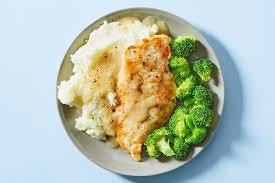
If tracking macros doesn’t feel a bit annoying, tedious, time consuming, or frustrating at times, you probably aren’t doing it right. It takes a lot of time and energy at first. There is a big learning curve. I typically recommend that my clients start by making component style meals. Meaning single items served separately. Like broccoli, chicken, and potatoes. This makes tracking a lot more simple at first.
There is really no point to tracking your food in a macro-tracking application if you aren’t weighing and measuring (almost) every ingredient.
I’ll say that again. If you are estimating, stop wasting your time with tracking. You need to weigh or measure everything for this to be worthwhile.
Of course, there will be times where estimating is the only choice, but you should be accurately tracking minimum 80% of your food to make this activity worth your effort!
The app I recommend to my clients is Cronometer. They have a robust database that is based on curated, research-grade datasets, and then allows controlled user submissions are allowed (they are reviewed for accuracy by internal staff). This is different than an app like MyFitnessPal which allows users to create and share entries, meaning many of them are inaccurate. This system also allows for rich micronutrient data. The app will distinguish which entries are from the USDA (lab-analyzed), NCCDB (high micronutrient depth), and Generic and Brand information.
In this video I am making a mixed meal. Some examples of mixed meals include casseroles, stir frys, salads, etc. This is the type of meal where my clients tend to get really stuck in tracking.
We don’t want to stick with packaged foods because they are easier to track, but this is something I see frequently. It is possible to get the information for a mixed-meal style food, it just takes some work up-front.
This video takes you through how I would create a custom recipe, and log it using grams so I can have a variety of servings.
Notice how I follow the recipe using measuring cups, but I am also weighing everything that I can using grams. This is because measuring cups are much less accurate.
Think about 1 cup of potato chips. One cup could have a lot of chips if they are all flat and stack perfectly. One cup could have about 4 potato chips if they are kind of crumpled and misshapen (my favorite chips TBH). Is my cup heaping, or measured right at the line? How much air is between the chips? If I am weighing the chips out, it is much more accurate. I know I am getting the right amount of chips.
If you are just getting started with tracking macros, or feeling more interested in trying this, let me give you a few starting points to consider.
Start by tracking what you normally eat.
Don’t try to change your diet to be perfect and learn how to track in the same week. Simply start by tracking what you normally eat. See how this compares to your targets, then work to make the changes needed to hit your targets.
Be realistic with your targets.
You don’t need an insane protein goal (anything over 120 g for the average person is unnecessary typically) or a ridiculously low calorie goal. Sustainable wins over extreme all the time. Work with a professional to get realistic targets to start with, and know that these are dynamic.
Designate extra time to track.
This takes time and energy, your meals won’t come together as quickly at first. Make sure you don’t wait until you’re starving to start the process.
Have go-to meals you repeat over and over.
Much easier to track, and less to think about.
Understand that this is a temporary solution.
No one should track their macros everyday, indefinitely. We want to do it for a period of time, learn some information about our diet, and move back into eating intuitively with structure.
This was an extremely quick and dirty overview of tracking macros, and really a way to show the video that took me an entire Saturday to make!
If this topic caught your attention, tell me.
What do you want to understand better?
Drop your question in the comments or send me a message. I create content based on what you actually need help with, so the more you share, the more specific and useful I can make this for YOU!
Talk soon!
-Kate, your RD bestie