

Fiber 101
because eating more protein isn't going to help you poop.

Dietary fiber is the it-girl of 2026. While we have all been focusing on protein for years, neglecting fiber is starting to creep up on us. Fiber is linked to lower rates of cardiovascular disease, type 2 diabetes (adult onset diabetes), and colorectal cancer (which has taken too many people from us.) It also can improve satiety, influences our gut health and gut microbiome, enhances blood sugar control, improves lipid metabolism, and is important for having good poops (aka regular bowel movements that feel like you have fully evacuated your bowels. Who wouldn’t want that?)
What is fiber?
Currently, fiber doesn’t have a ‘universal definition’ because new compounds are continuing to be found, and these compounds may share the chemical structure or physiological functions of fiber, but not always both of those together.
Fiber is a type of carbohydrate. It is a complex carbohydrate, which means it is a long chain of sugar molecules. This is different than a simple carbohydrate which is one or two sugar molecules bound together. Complex carbohydrates take longer to digest than simple carbohydrates, and fiber is unique in that it isn’t digestible at all.
When I discuss fiber with my clients, I explain that it is a “non-digestible part of the plant cell wall.” In fiber, the glucose molecules are connected through beta-1,4 glycosidic bonds, and we (as humans) don’t have the enzymes to break these bonds down. So the molecule moves through our body intact.
Fiber recommendations are to eat about 14 grams per 1000 calories. Meaning if you eat a 2000 calorie diet, you should eat about 28 grams of fiber (or more) per day. You can definitely have more than this minimum recommendation, but it is important to increase your fiber levels slowly. We have all had the experience of eating too much fiber too quickly and it isn’t comfortable or cute (lots of bloating and farting.) Eating too much fiber can also cause constipation, uno reverse!
Eating a higher fiber diet has a lot of benefits for your body which include
Helps to maintain a healthy body weight but helping us to feel full longer after meals and more satisfied with food
improved blood sugar control
reduced cholesterol
increased insulin sensitivity (we want to be sensitive to insulin. Insulin sensitivity is the opposite of insulin resistance)
Reduced risk of Type 2 Diabetes
Reduced risk of colorectal cancer
Improved gut microbiome diversity (fermentable fiber is the food that our gut microbes eat)
Reductions in inflammation (when the gut microbes “eat” our fiber, they digest it and produce short chain fatty acids (SCFAs) which are anti-inflammatory molecules that circulate through the body)
Reduced incidence of constipation
So as you can see, eating fiber is important and good for a lot of reasons. Now let’s talk about the types of fiber and how to actually get more fiber into your diet.
Let me start off by saying that fiber is a carbohydrate. So in order to get more fiber, you need to eat carbohydrates. Keep in mind, all fruits and vegetables fall into the category of carbohydrates.
Different types of carbohydrate foods contain different types of fiber. It is important to get a mix of all the different types of fiber, so it isn’t wise to eliminate entire food groups like all grains, or all fruit, or all carbohydrates, unless there is a true medical need. By eliminating carbs, you are missing out on all the health benefits listed above and really good tasting food.
Grains are often high in insoluble fiber, and some high in soluble fiber.
Legumes and beans are rich in fermentable fiber and resistant starch
Fruits tend to be high in pectin and soluble fibers
Vegetables are high in insoluble fiber, and some are high in soluble fiber as well.
Seeds are extremely fiber dense, and contain a mix of soluble and insoluble fibers.
What are you talking about soluble and insoluble fiber?
Fiber can be categorized in 4 main ways, soluble or insoluble and fementable or non-fermentable.
Soluble Fiber: Forms a gel-like substance when in liquids. Think chia seeds, flaxseeds, oatmeal (like how it turns to cement when it hardens in a bowl). This category includes pectin which is a specific soluble fiber found in lots of fruits, like apples.
Insoluble Fiber: This type of fiber doesn’t change in texture or form unless it is by being chewed, cut, blended, or physically modified. It doesn’t dissolve, and I like to think of it as a broom moving through your GI tract. It helps to add bulk to your stool, and makes it move through the system faster.
then
Fermentable Fiber: This is the fiber that is able to be broken down, or eaten by your gut microbes. This happens in your large intestine, and the break-down process (aka fermentation process) leads to SCFA production, along with gas sometimes. This is the type of fiber most often responsible for farts.
Non-Fermentable Fiber: This type doesn’t significantly break down. Instead it mostly moves through the system intact. Think about corn, it is mostly non-fermentable (and insoluble) and the corn husk comes out, well… intact. This adds bulk to your poop and makes it come through your system a bit faster.
So a fiber can be
Soluble and fermentable
Soluble and non-fermentable
Insoluble and fermentable
Insoluble and non-fermentable
The biggest metabolic benefits come from fiber that is viscous (or gel-like) and fermentable. These fibers include
Beta-Glucan (found in oats)
Psyllium Husk (like in Metamucil, if you are a client of mine, you know about Metamucil)
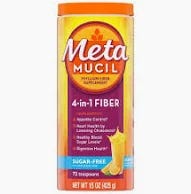
love this stuff. So much. Guar Gum (this is made from seeds of the guar bean plant, and is used as a thickener, binder, and emulsifier)
Glucomannan (found in konjac plants, which are used to make things like Shirataki Noodles, those low calorie (and low key kinda slimy) noodles)
These foods help with reductions in LDL-Cholesterol (the “bad” cholesterol), blood sugar reductions after eating, and make you feel more full. I frequently use psyllium husk to help clients, and myself, feel more satiated after meals, and I aim to include foods rich in soluble fiber at most meals. This is why you see oats so often in my breakfast recipes!
Not all fiber is equal
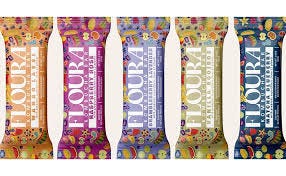
As fiber continues to be the shining star of 2026, you are going to see lots of foods with added fiber. This could be things like keto breads, “carb smart” tortillas, high fiber cereals, protein bars with added fiber, and cereals with fiber added in. While this type of fiber isn’t necessarily “bad” for you, it also isn’t providing the nutritional benefits that fiber from foods does. With many of these types of foods I see more bloating or GI discomfort because it is dosed in levels that are too high or in products that exacerbate GI discomfort (like a protein bar laden with artificial sweeteners, and processed protein supplements.)
Fiber that’s naturally found in foods tends to behave a little differently than fiber that’s isolated and added to processed products. In whole foods, fiber is packaged inside the plant’s structure along with other nutrients and compounds that slow digestion, influence how glucose is absorbed, and support the gut microbiome. When fiber is added to foods, it’s often a single isolated ingredient that doesn’t always have the same properties, like forming gels or meaningfully slowing digestion. That doesn’t mean added fibers are completely useless, but the strongest and most consistent health benefits we see in research come from eating foods that naturally contain fiber, like beans, whole grains, fruits, vegetables, nuts, and seeds.
The most common types of added fiber are
Inulin/Chicory Root Fiber- this type is highly fermentable, prebiotic (feeds our gut microbes) and soluble fiber. It can cause a lot of gas and bloating. Don’t ask me how I know…
Resistant Maltodextrin/Soluble Corn Fiber- this type is found in lots of low-net-carb foods like keto tortillas, protein bars, and snack foods. It has a low viscosity, meaning it doesn’t help with glucose or cholesterol management, or satiety and fullness. It is used frequently because it doesn’t change the texture of the food very much.
Polydextrose- found in sugar-free candy, baked goods, ice cream, and protein snacks. It is usually used to replace sugars or to add bulk to foods.
Cellulose/Powdered Cellulose- this is the stuff added to shredded cheese so it doesn’t cake together, and also used in low-carb tortillas. It is insoluble, non-fermentable, and has no metabolic activity or benefits. It is more or a texture and anti-caking agent.
Cellulose Gum- this is similar to cellulose powder, it is soluble but has no physiological benefits. It is found in dressings, ice cream, tortillas and bread, plant milks , and sauces.
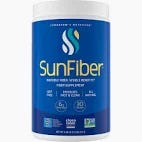
Partially Hydrolyzed Guar Gum (PHGG)- this is a soluble, fermentable, low-viscosity fiber that is often used to help people with poor gut health improve their microbiome as it is well tolerated. It is mostly used in supplements and oral nutrition supplements like tube feeding formulas.
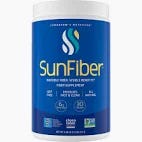
a common type of PHGG
As you can see, these products may make a number look better on a nutrition label, but they aren’t all giving the benefits of eating whole-food based fibers. It is important to know where to find fiber on a label, as well as reading the ingredients. It might look like a food is too good to be true (I’m looking at you Carb Smart Tortillas 👀) and that means it probably is. You aren’t able to truly get all of the fiber you need in one day from a tortilla or a bagel. And you definitely aren’t getting all of the metabolic benefits. Te fibers with the strongest metabolic evidence (like psyllium or beta-glucan) are very viscous, or gel-like, which makes them harder to use in processed foods.


Getting your nutrition from whole foods is almost always going to be the best for your health.
So all that being said, how do I get more fiber into my diet? Let me share some of my top tips.
Add fiber to breakfast. This is a great time to get a meal very high in fiber because the foods with the best benefits are breakfast foods! Think of oats, chia seeds, berries, and whole grain breads. This is why overnight oats make a frequent appearance in my meal plans.
Add beans to anything. Throw them in a pasta, a salad, use as a crispy topping to a salad. Blend them into a sauce, or a smoothie (trust me, you’ll be full for hours) or get dried edamame, chickpeas, or broad beans to snack on.
Use whole grains more often. Switch to a whole grain bread, use farro, quinoa, teff, and sorghum in salads. Buy whole wheat bread, tortillas, and pasta. Look for a 10:1 ratio of Carbs:Fiber to indicate a meaningful level of fiber.
Add berries. Frozen berries are great to add to desserts, snacks, yogurt bowls, and smoothies. Make a jam out of frozen berries and chia seeds cooked on the stove.
Keep fruits and veggies ready to eat. If you have cut up vegetables and fruits ready to grab, you’re more likely to eat them. Don’t cancel your favorite snack of chips and dip, just add some veggies to it!
Increase fiber slowly and drink LOTS of fluids. This will help to move it through your body and reduce bloating. If you feel super bloated, an enzyme like Beano or a medication like Gas-X can help to reduce bloating. (Beano contains that missing enzyme we need to break the beta-bonds!)
Leave the peels and skins on your food. Potatoes, apples, pears, cucumbers, and even kiwi (yes leave the skin on!) have way more fiber with the skin on.
Add a little fiber to a normal meal by sprinkling on hemp seeds, ground flaxseed, or chia seeds. Top a salad or pasta with some nuts, blend them into smoothies and soups, use flax mixed with water in place of an egg to bind meatballs together.
Think about fiber at snacks, not just meals. Fruit and nuts is a great snack that is packed with fiber!
Eat boring foods. Some of the best fiber wins come from foods like bran muffins, popcorn, potatoes with skin on, a whole grain bread, or bran cereal. It doesn’t have to be fancy to work, just eat up!
So tell me, what questions do you have left about fiber? I’m here to help! Drop them in the comments
Xo Kate, your RD bestie